
Use one or more of the following book related sayings as a starting point to generate visual ideas and responses:
Bookworms, A closed/open book, The oldest trick in the book, You can’t judge a book by its cover, In someone’s good/bad books, By the book
During this early formative stage, aim to be as wide-ranging and imaginative as possible in your ideas. ALL ideas are valid at this point, so don’t censor; this is not the stage to decide what is a ‘good’ or ‘bad’ idea – at this point they are all just ‘ideas’ with equal merit. Let one idea flow fluidly, intuitively and organically into another to make unexpected links and associations. Record your thought processes and ideas using thumbnail sketches, spidergrams and annotations.
Thumbnail sketches are a way of recording ideas through quick pen or pencil line drawings. The quality of the drawing is not important; a drawing of a person does not need to be anatomically accurate, for example. The drawing serves as a visual reminder to you of a fleeting idea. Aim to make thumbnail drawings in the same quick way that you make short written annotations – keeping up with the flow of your ideas. Draw a range of visual and conceptual possibilities using the book sayings as your starting point. Aim to spend 45 minutes working on this, generating as much content, potential ideas, thumbnails, visual metaphors or imagined books as possible.
Thumbnails can give an indication of composition and art direction. For example, how does the subject sit in the frame? How is the subject lit? What particular attributes does that subject have? Thumbnail sketches, along with annotations, are a good starting point to begin exploring these aspects.
Book Design 1: Creative Book Design
This exercise is like many others in my previous units, aiming to show how to generate ideas by using lateral thinking so that we can depart from initial ideas and arrive at ones that are not immediately available by investigating the idea at hand and unfolding all the possibilities within.
I have started by picking one of the phrases and creating a spider diagram of all of the different ideas that came to mind.
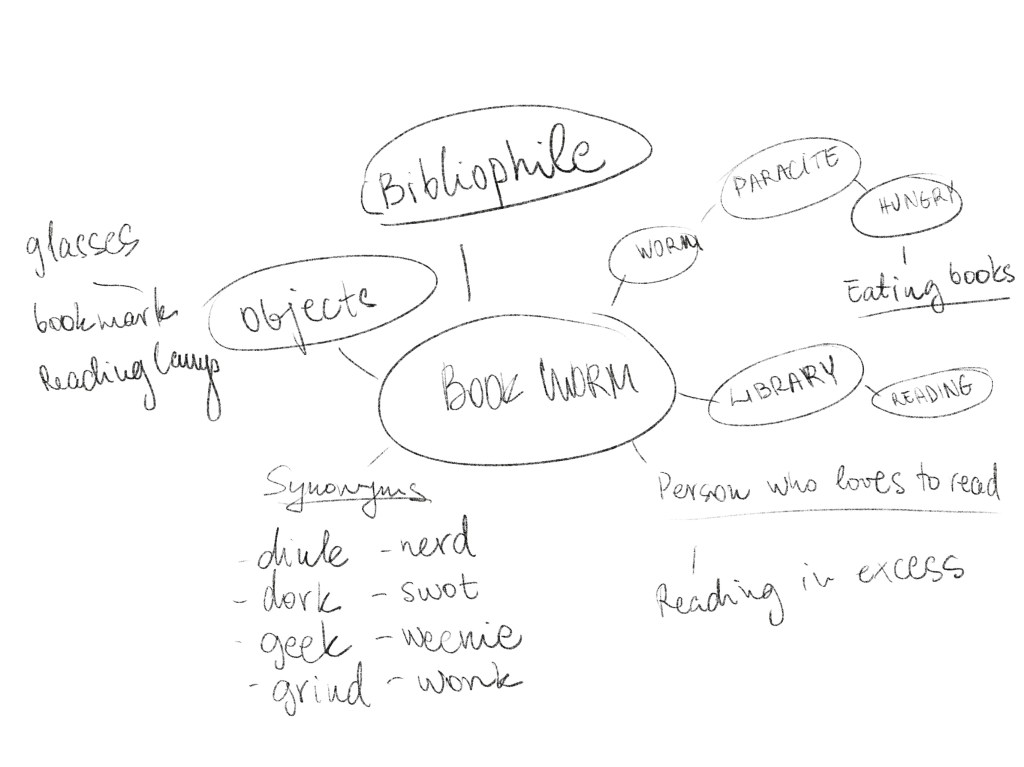
After this stage, I have started to generate some thumbnails. It wasn’t terribly clear from the exercise text wether the ideas had to be book covers, but this is the format I have chosen to explore this idea in.

The ideas were not very inspired, but I thought that some of them were actually pretty interesting.
I did repeat the exercise for the “You can’t judge a book by its cover”.
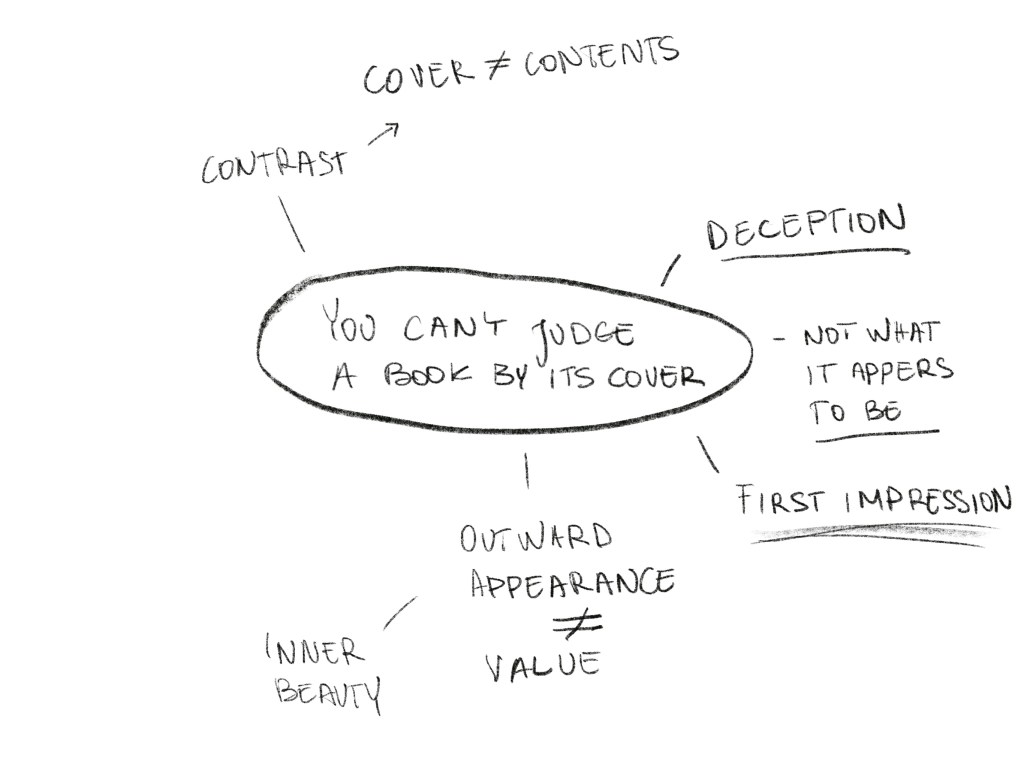
I found it hard to put thoughts down around this one. I think because it is quite straight forward in my mind and found it hard to investigate the idea in many ways. Nevertheless, I have moved onto creating some thumbnails to see what I can come up with.

I think that these turned out pretty uninspired. I think the reason is that I had no real knowledge of the project or the background which normally inspires me to come up with ides just as much as a the title itself would.
Reflection
I think I feel like I have a strong grasp on how to generate ideas and I have a good workflow when it comes to doing this task. There is always things that can be improved however, I know that I need to let go and record ideas much more freely in advance to get to ideas that are hard to reach.
 Graphic Design