
Collect as much reference as you can find for the1950s period. Catalogue the information you find according to these categories:
People and costume, Architecture and interiors, Art – painting, drawing sculpture, Graphic design – posters, books, typography, Advertising, Transport, Film and TV, Surface pattern and decoration.
Be eclectic in your sources. Identify the visual qualities that are universal within the categories – shapes, textures, colours, style and other features.
In your learning log write a short review of the 1950s from a visual perspective.
Describe the characteristics that typify the decade and the ideas and visual trends that were prevalent at this time.
Are there reflections of the 1950s in any areas of contemporary art, design or culture? If so what– give examples? It may be useful to look both at what preceded and followed the 1950s to gain a sense of the broader context of this era.
Now make an illustration of someone sitting in a chair surrounded by typical artefacts to give a teenager an idea of the 1950s.
OCA Key Steps in Illustration
Research
I have started my research on Pinterest as I know that there are tons of good images on there about all sorts of topics. I found this a good starting point as it can lead you to all sorts of interesting websites on your selected topic too.
I created the below board using a mix of sources, (sources list below) especially liked vintag.es. This blog collects images from times past and puts them into niche categories such as 23 Vintage Photos of Heathrow Airport, London in the 1950s or 45 Vintage Snaps That Show How the 1950s Couch Styles Were Like. This was immensly helpful as I was able to sif through hundreds of images from the 1950s and pin them to my pinterest board.
The only references I couldn’t really find here was relating to Art, so I wanted to dig into this topic a little further using other sources.
I came across an exhibition at the Tate Modern on Abstract in Britain in the 1950s. I might go and see this in person, for the time being, I added a few pieces from the exhibition website to my board. I gather that there was a real movement in terms of abstract in the decade that really defined decades to come. This is an interesting twist to me. I find it quite fascinating that the art that was created in the decade have not made its way into the everyday lives for at least another decade (or 2). Wallpapers in the 50s were more flower patterned than abstratct or geometric. I think this nicely shows the divide between the everyday commercial art and fine art in general.
Analysis
After my research I think I had a good idea of what the 1950s looked like visually, however I wanted to distill this into some words that come to mind when I think about the are following my digging.
I think the first thing that comes to mind is elegance. I feel like people and things in this era had a certain glamour that seemingly everyone tried to uphold.
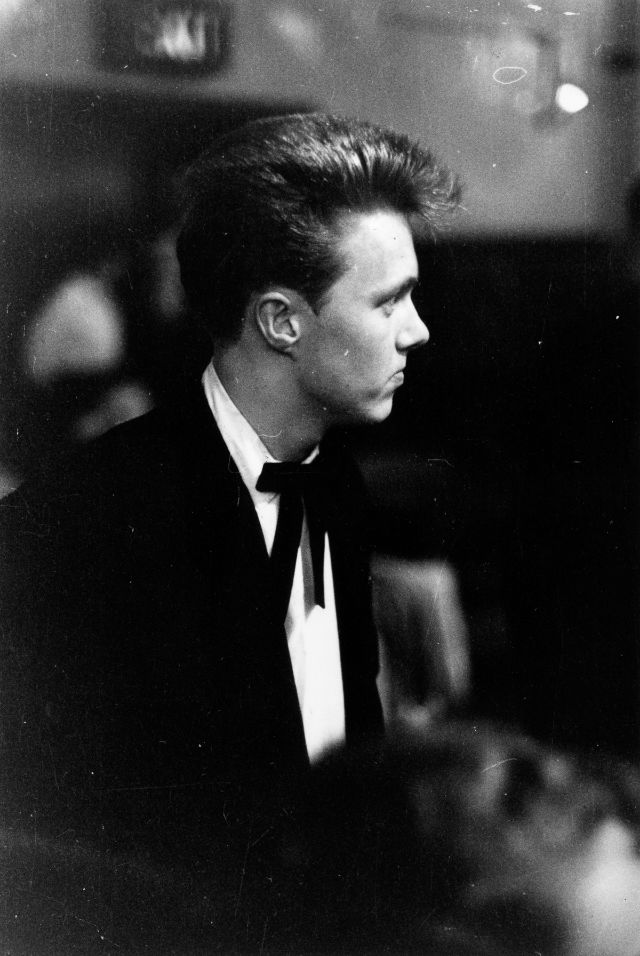
I was quite fascinated by the 50s British trend of Teddy Boys, or Teds. This trend started in the 50s and spread across Britain like wildfire. It was a subculture where young adults would wear smart clothes, probably inspired by the dandies of the Edwardian era. I found it surprising that this trend was also adopted by girls. This style is almost synonymous with the Rock and Roll music movement as well.
This era has also seen the invention of Polypropylene which led to the mass production of plastic consumer items. This has also had a big impact on the decade, however probably more widely visible in the 60s and 70s.
I heard and seen some conflicting facts about wether it was commonplace for working class people to have televisions in the 1950s. I wanted to look into this to see what the truth is. This is what I found:
Fewer than two million British homes owned a TV set at the beginning of 1953, and these were mainly in London, Manchester, Birmingham, Cardiff and Glasgow. But in the build-up to the coronation, 526,000 sets were sold as coronation fever swept the nation.
https://nostalgiacentral.com/television/tv-by-decade/tv-shows-1950s/1950s-television-introduction/

Illustration
I think I have an illustration in mind that would perhaps depict a teddy boy (or girl?) in their parents sitting room, surrounded by the everyday 50s objects. I would like to make this as true to the time as possible, so knowing what objects would have been in a Brittish sitting room in the 1950s will be essential.
After I have done my research, I wanted to jump into sketching. First off, I wanted to sketch out a collection of items that I think may work for my scene.
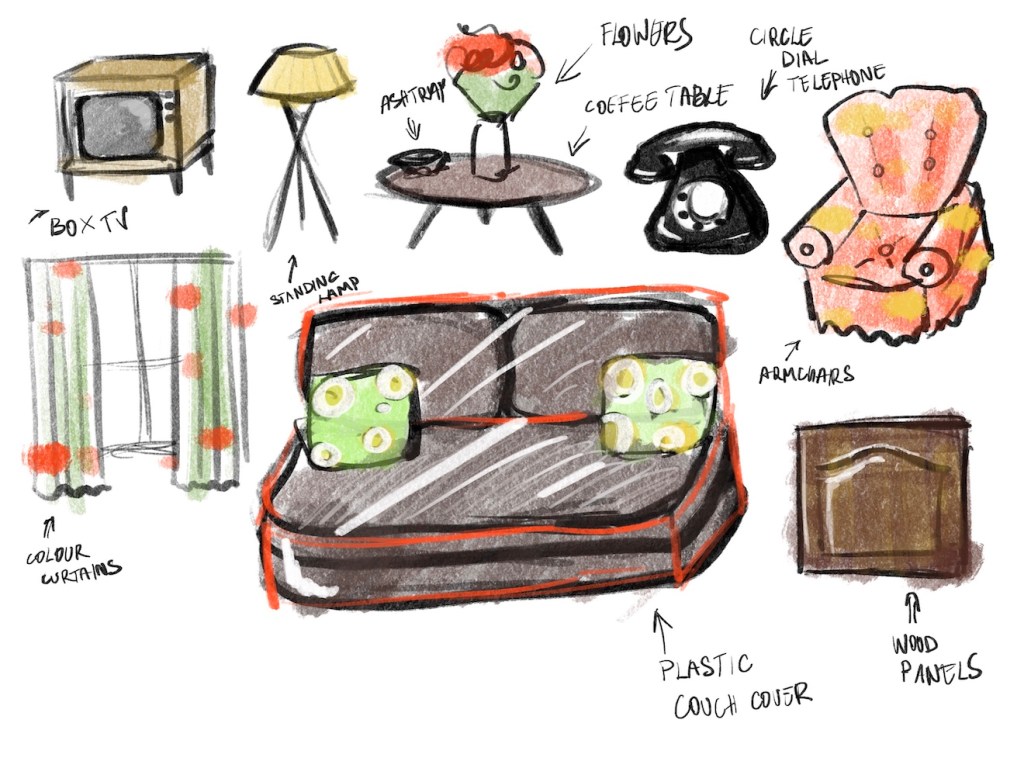
Some of these I have done based on my boards, some of them out of my own mind based on what I seen during my research. I think these items mostly capture the time, however I know that for the scene to work, I will need an awful lot more than that.
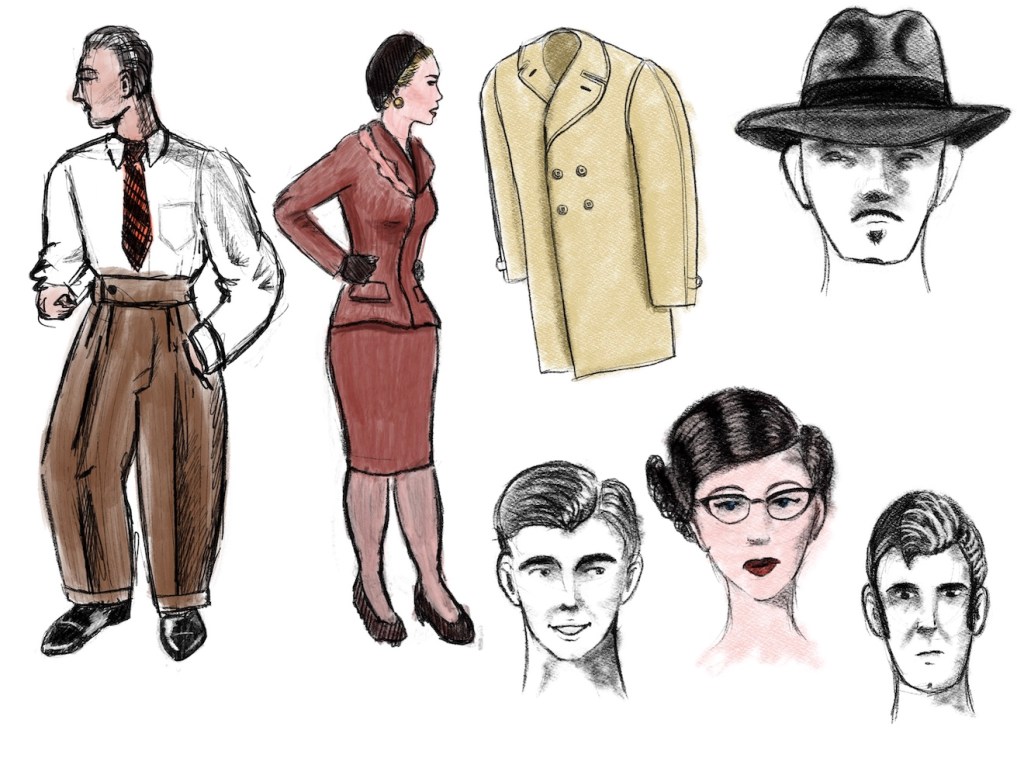
Next I wanted to repeat the above exercise but for people and clothing. I think this is a very important part of this to be able to convey that 50s feeling.
In my next step, I wanted to see if I can come up with a loose drawing that would be the basis for my scene, just a sketch that would place these objects in a scene.
I think I need to explore what makes a teddy boy, so I will do some cataloguing of this. I would like to pay particular attention to the details such as the clothing and the attitude.
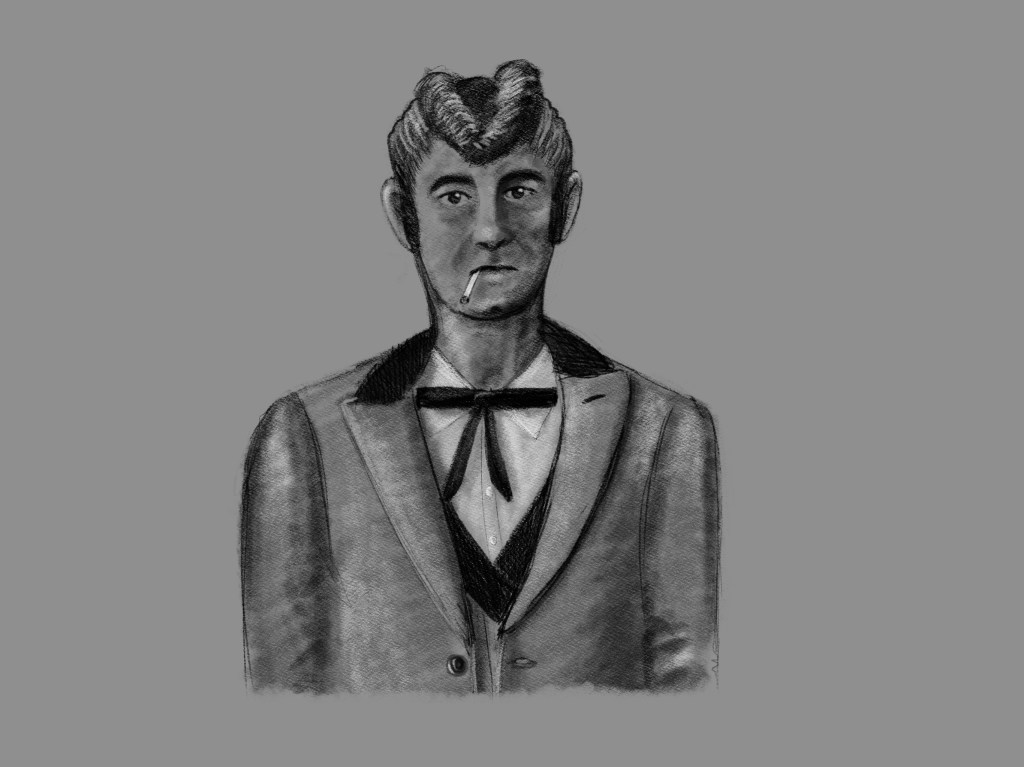
After doing some sketches of the individual elements, I moved onto thinking about the scene I wanted to illustrate more thoroughly. I wanted to create something that perhaps captures the excitement of having a television for the first time, and include all sorts of items that I think is very typical for the era.
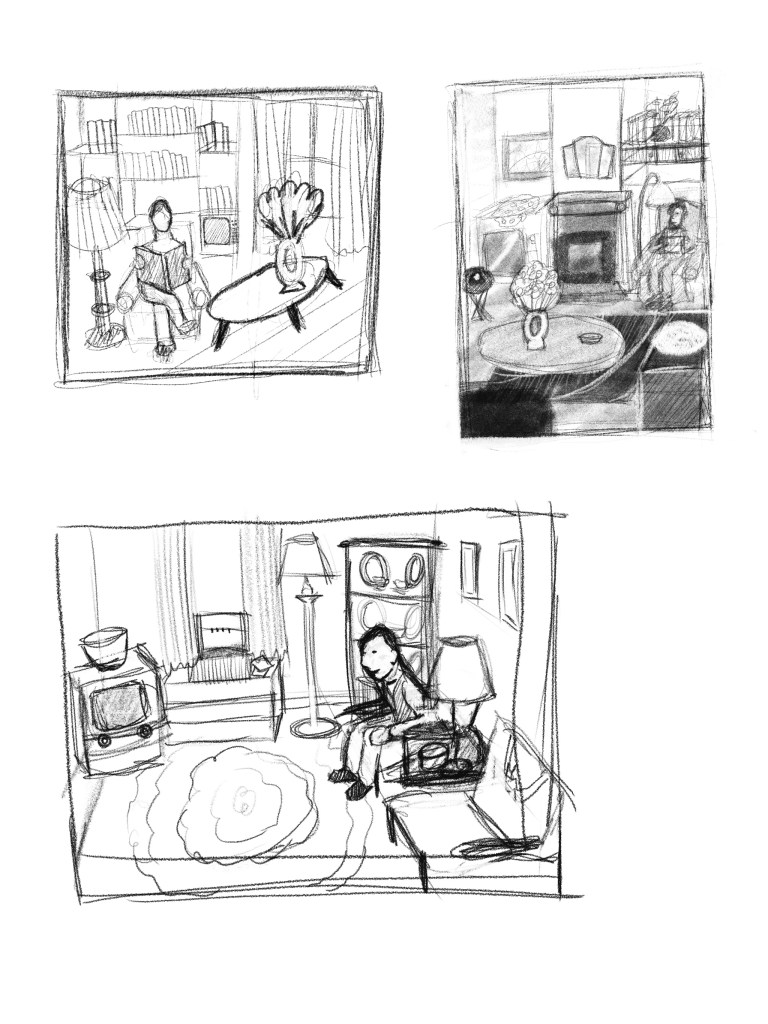
While I was drawing these I tried to remember the things I seen during my research and every so often refer back to these to keep on track. For the 3rd drawing I looked at an image I found of a 1950s British sitting room and basically copied the layout of this. I think this really helped with the perspective. Then I added my figure to fulfil the brief more. I think I will go with this last one to see if I can create a tidied up drawing that works for the brief, and add some further elements to emphasise the 50s feel.

I was looking at different references to ty and squeeze as many of the 50s references as possible. I felt like the picture was lacking dynamism and looked too static. After showing this to a few people and doing some thinking myself, I decided to add a few more people to my sketch.

I think adding more people to the sketch will allow me to explore more of the archetypes of people I have researched, and will add more of a. story to the image. I think I will make it look like a family watching the coronation, a truly British event of the time.

I had to make a few changes to the sketch as there were some issues with the perspective and also removed the 4th person as it felt slightly out of place. After this I wanted to tidy up the lifework as during my sketching I made some of the lines way too thick.
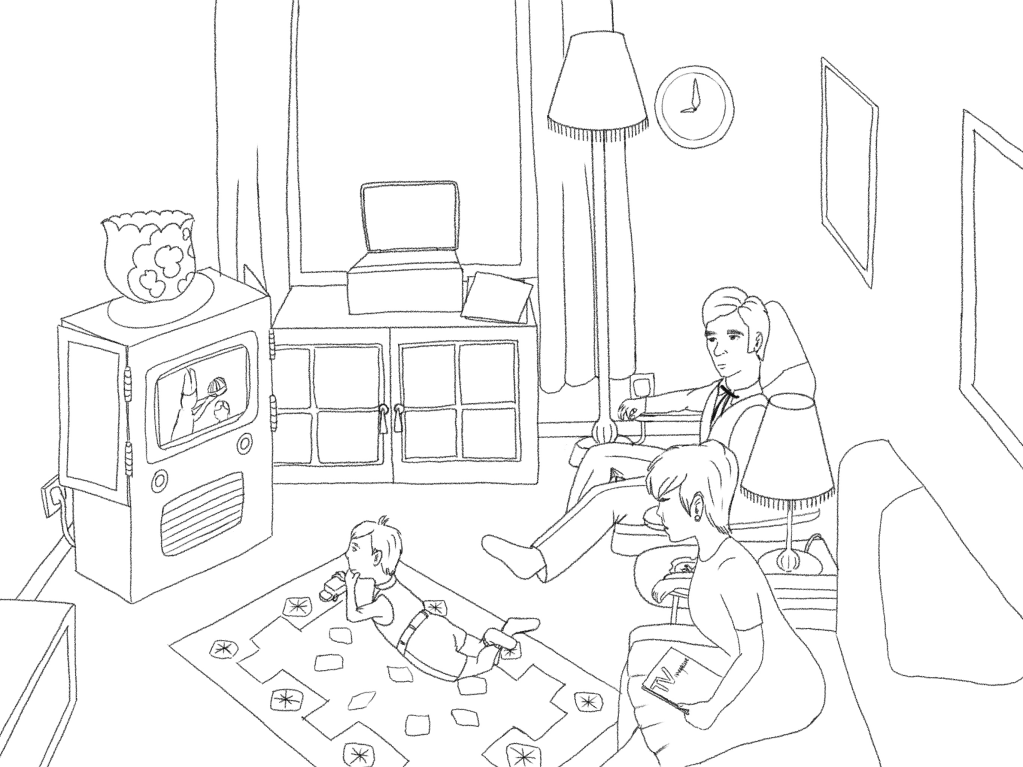
Once my sketch was in place, I started colouring. I wanted to keep the colours sort of muted as I found that this was more typical for the era.

Once I laid the basic colours, the sketch started to come alive a bit more and I really started to like it again. I wanted to try a new technique I recently learnt where you plunge everything in darkness first and start erasing the areas where the light would hit to create a pretty dramatic lighting scheme for the image.

I think overall. the image fulfils the brief. It does feel like the 50s based on my research and I think it turned out pretty well. I spent about 9 hours creating this illustration which is longer than I wanted to spend on it, but I had quite a few challenges at the sketching phase to get the perspective correct and therefore the sketching took way longer than normal. Overall, I am happy with the results.
I think this exercise shown me that the research is a super important part of creating an illustration. Visual research enables you to reach beyond your own experiences and draw something that is more accurately represents your topic.
Sources
- https://vintagepatterns.fandom.com/wiki/Category:1950s
- https://www.alamy.com/stock-photo/1950s.html
- https://www.youtube.com/watch?v=9LRHZUUYm4U
- https://www.gettyimages.no/photos/1950s–cafe?page=24&sort=mostpopular&phrase=1950s%20%20cafe
- https://www.vintag.es
- https://www.widewalls.ch/1950s-art/
- https://www.tate.org.uk/visit/tate-britain/display/walk-through-british-art/1950\
- https://en.wikipedia.org/wiki/1950_in_art
- https://nostalgiacentral.com/television/tv-by-decade/tv-shows-1950s/1950s-television-introduction/
 Graphic Design
Looks great…
Liking the growth in your ideas and research into teddy boy hair styles.
LikeLike