
How many logos can you name? Macdonalds? Nike? Apple? All huge multinational corporations with millions to spend on building brand recognition. Have a look at logos and see how they work – pay attention to the colour schemes and simple designs. You will probably also find that, although you couldn’t recall them immediately when you see them you immediately recognise them – banks, shops and products. Can you immediately recall the OCA logo?
OCA Graphic Design: Core Concepts
In this research point I will look at logos and analyse them, what makes them work? What do they communicate? What is their story?
Apple Logo
The Apple logo is one of the most iconic logos in the world. Sure the company it represents is one of the larges corporations in the world, so it is only natural that everyone knows this logo. But where does it come from? Why an Apple? The apple is a symbol that was selected because of the story of how Isaac Newton discovered gravity. According to the story he figured it out as an apple fell on his head. The company’s first logo was Newton sitting under an apple tree, with a quote: “Newton… a mind forever voyaging through strange seas of thought.” that was in the frame of the logo.

Steve Jobs thought that the first logo was very old fashioned so he hired graphic designer Rob Janoff to create the now classic bitten apple. The original rainbow coloured apple logo was created as a nice homage to the world’s first colour computer the Apple II. Apparently Jobs insisted on having the green on top of the logo, because that is where the leaf is, but the other colours are just random.
Some people think that the logo is also refers to Alan Turning, the father of modern computing, who was killed by a poisoned apple he took a bite out of. Hence the bite. Some other sources state that the logo was just there for scale, because otherwise it would be harder to recognise the fruit as an apple.
One of the deep mysteries to me is our logo, the symbol of lust and knowledge, bitten into, all crossed with the colors of the rainbow in the wrong order. You couldn’t dream a more appropriate logo: lust, knowledge, hope and anarchy.
Jean-Louis Gassée, former Apple executive
The multi coloured logo was in use for 22 years, before it was changed to the modern monochromatic Apple logo. Interesting that this logo remains largely unchanged despite it’s age, it still looks fresh and modern.
Nike Logo
The Nike logo is another one of the super brands out there that is recognised by almost everyone and has been part of our culture for a long time. The company changed its name from Blue Ribbon Sports to Nike in 1978. The word Nike is the name of the Greek goddess of victory.

The Nike logo was designed by Carolyn Davidson in 1971, she was a graphic design student at the time at the Portland State University. The design was apparently created by her to earn some extra funds towards her oil painting classes, and was paid $35 at the time. She was later recognised for her work and got stock in the company that worth around $1M.
The logo is a simple tick mark that that is more ergonomic and implies movement and speed. It is said that also resemble wings as a homage of the Greek goddess Nike got its name from.
Coca Cola
Coca Cola is another one of those iconic brands that had its logo for a very long time.
The logo was fist designed in 1887 when the company was formed by one of the founders. They believed that the double C in the logo would look good in advertising. The logo was written up in Spencerian script, a writing style popular around that time.
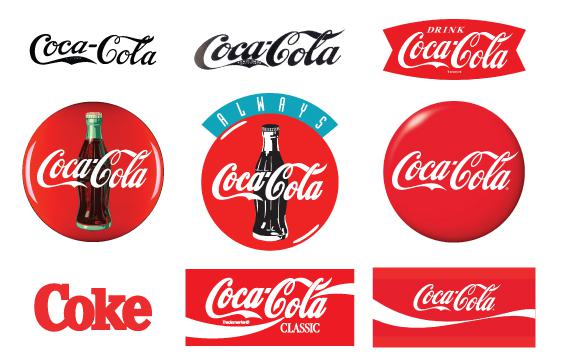
The logo became iconic because it has been around for over 130 years. It is a very long time. Apart from a few decorative elements that were added like the white wave in 1969, the logo remains largely unchanged. It probably just shows that a strong design can withstand the test of time.
McDonalds
The McD logo is another one of those designs that you could recognise anywhere. Also known as the Golden Arches, which was an element of the architecture of the building of the first franchised restaurants that later became the logo.
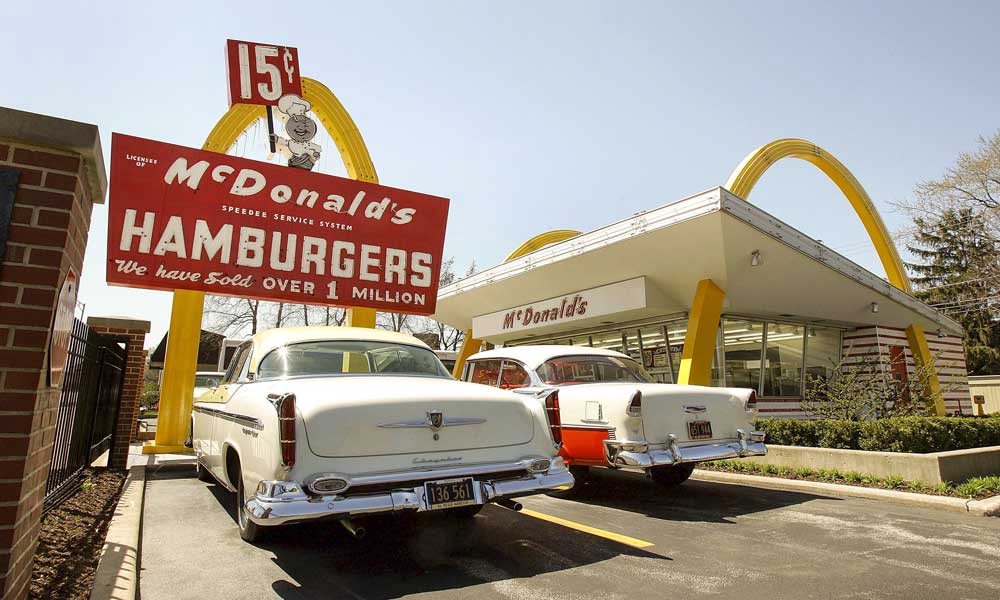
The logo was initially designed in 1968, it went through quite a few iterations the latest one major redesign in 2003. The logo is the first letter of the brand but it is the yellow and red colour combination and the particular shape that makes it so iconic.

McDonalds and the logo is synonymous with urban living and is a piece of pop culture. You can go to pretty much any city around the world and you will find on of these restaurants.
Twitter Logo
Thee blue bird logo of twitter is instantly recognisable and easy to recall. Just like the Apple logo it is a strong silhouette but what makes this really effective is the blue colour that is always accompany the logo. The Twitter logo went through some iterations through its short life, from a green gooey looking logo to the blue bird we all know today.

Twitter is very protective of their icon, giving you strict guidelines on how to use it. I think this is one of the reasons it stands out as one of the most recognisable logos of our time.
OCA logo

The OCA logo is also interesting. In parts it carries the UCA logo as a subsidiary of the university, then there is the A icon appended tho this which is made of loose brush strokes. I think the logo is quite fresh, but wouldn’t necessarily call it unique or iconic. I think the fact that it is using only text elements can make it a little samey with many other logos. I didn’t find it very easy to recall at all.
Sources
Reflection
In this research project I looked at a few of thee most iconic brands and their logo designs. Most of these are an interesting piece of design history. What I learnt from my research that logos often go through a long iterative process and evolve with brands. Having a logo is a commitment but if a company is changing its profile, the logo should follow. A very interesting observation of mine is that interesting colour and a strong silhouette usually makes a logo that is easy to recognise, while the details of text and intricate design in logos may be less effective as the details get lost. I believe a strong logo should be able to stand on its own without reliance on text. This usually comes from years of PR and marketing though, and cannot be granted based on the strength of the design.
 Graphic Design